Project Idea Competition for Coastal Wetlands
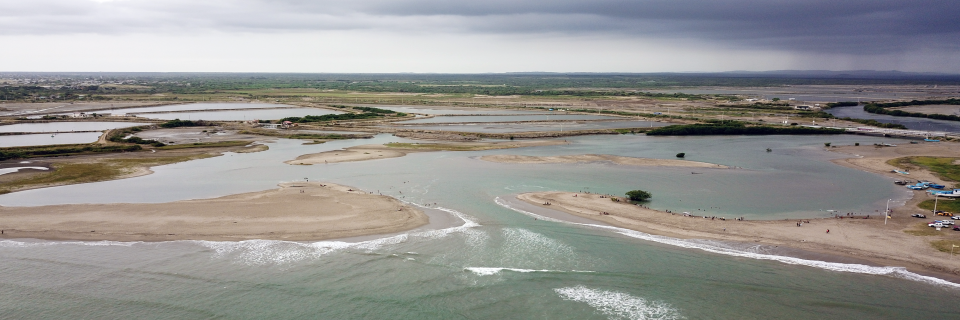
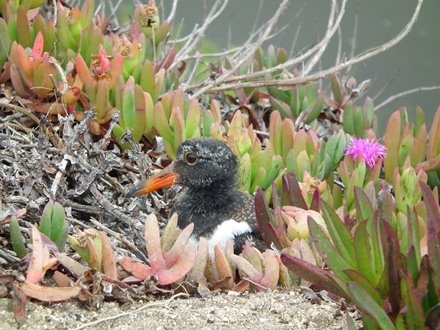
Marking the World Wetlands Day 2025, the foundation Manfred-Hermsen-Stiftung launched its fourth project idea competition for the protection of coastal wetlands along the arid-semiarid Pacific coast of South America. Out of 43 project proposals, three projects each in Chile, Peru, and Ecuador are being funded. The focus is on environmental education, applied science, wetland restoration, and local capacity building.
Through exchange and collaboration between the projects, coupled with participatory approaches at the local level, a wide range of stakeholders from diverse sectors and social strata are being reached and significant progress in the implementing of our initiative´s action plan made.
The Nine Projects of the Fourth Project Idea Competition:
 Environmental education and dialogue with local stakeholders at the Canal de Jambelí in the Gulf of Guayaquil, Phase III – Aves y Conservación, Ecuador
In this project, Aves y Conservación is working with local communities, schools, and authorities to strengthen mangrove protection in the Jambelí Canal in southern Ecuador through environmental education and actions against marine pollution. A particular focus is on preventing the discharge of plastics, waste, and sewage and on promoting the establishment of sustainable governance and management of mangroves. Participatory approaches combine education and awareness raising with practical activities and concrete measures to improve the management of the valuable mangrove areas.
 Strengthening management and governance in the Isla Bellavista mangrove area – Fundación Ecológica Arcoiris, Ecuador
With the aim of strengthening community governance and sustainable use of the Isla Bellavista mangrove ecosystem, this project focuses on resources that the area offers to local communities, particularly the mangrove ark shell. Through cooperation with user groups, the development of educational materials in the local context, and the establishment of partnerships with academic and public institutions, practical approaches for the long-term conservation of this mangrove area and the sustainable use of it´s resources are being created.
 Environmental education program for population groups around the wetland of the indigenous community of Las Tunas – Fundación Progreso Comunitario, Ecuador
In this project, an environmental education program for children, young people and teachers as future multipliers is being developed in collaboration with local stakeholders. The focus is on the Las Tunas wetland in Manabí, Ecuador. Participatory learning methods and creative communication formats strengthen local identification with the wetland and long-term commitment to protecting biodiversity and ecosystem services. The program is being developed in consultation with local educational institutions and linked to existing national frameworks for environmental education.
 Protection of wildlife habitats in the coastal wetlands of Chaviña – AEDES, Peru
The project aims to secure the habitats and biodiversity of the coastal wetlands of Chaviña through applied research, citizen science and strengthened local governance. The collection of scientific data on flora and fauna will close knowledge gaps and enable effective conservation planning. At the same time, the involvement of local stakeholders is promoted and their coordination strengthened, thereby establishing a local governance model for the long-term conservation of the wetlands.
 ALB-HUM: Raising environmental awareness to protect wetlands – CooperAcción, Peru
This project works with eight schools in four coastal towns in Peru. A playful album about coastal wetlands, which combines scientific information and learning activities with links to specific wetlands, is used to raise pupils' awareness on the need to protect wetlands. The album is designed to be adaptable to different coastal regions and hence can be used in other coastal towns and schools in the future.
 Guardians of the Wetland: Governance and education for community-based conservation – Turismo Cuida, Peru
Focusing on the Pantanos de Villa wetland in Lima, this project strengthens inclusive governance structures and environmental education by promoting women's empowerment, youth participation, and volunteering. Capacity building is combined with low-threshold education and communication formats that facilitate access to the wetland and its biodiversity for the local population. At the same time, institutional cooperation is strengthened to promote the long-term participation of various stakeholders.
 Protection and renaturation of the Reloca wetland – Fundación Malvarrosa, Chile
This project updates the scientific data base of the Reloca wetland through geomorphological and ecological studies, including the characterisation of dunes, satellite-based analyses of vegetation and water dynamics, and water quality studies. At the same time, local capacities are being strengthened through training courses for municipal employees and the involvement of the local population. A participatory approach supports the creation of an illustrated map of the wetland as a basis for environmental education and renaturation measures.
 Witnesses of the coastal desert: Reviving knowledge to protect the Río Loa estuary wetland – Pontificia Universidad Católica de Chile (Loa UC Science Station), Chile
This project strengthens the protection of the Río Loa estuary wetland by documenting and valuing local and indigenous knowledge and integrating it into participatory approaches to environmental education and governance. Ethnographic work, a collective digital archive, and publicly accessible educational formats promote biocultural identity and perspectives for the protection of wetlands in one of the driest coastal regions in the world. Dialogue between local communities and institutions forms a central basis for the long-term commitment of local actors.
 Training, research and decontamination of the Mantagua wetland using recycled hair – Fundación Matter of Trust Chile, Chile
This project combines capacity building with a nature-based approach to decontaminating and restoring the Mantagua wetland. Local stakeholders are being trained in sustainable wetland management, while biofilters made from recycled hair are being tested to bind pollutants from the water. By combining training with applied research for the purpose of restoration, an approach is being tested that later shall be applied in other wetlands.