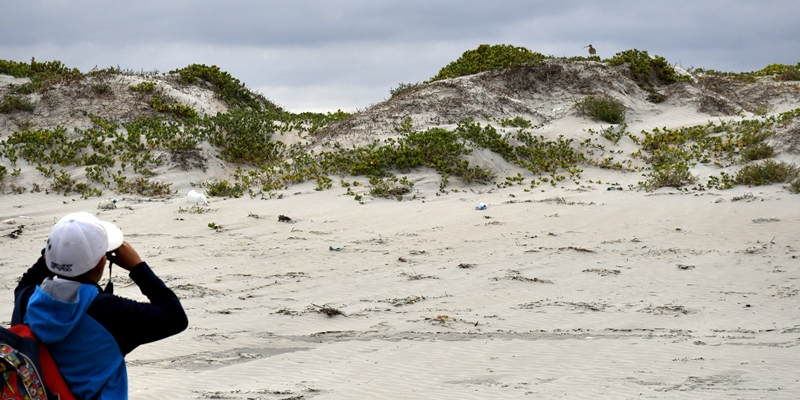
For the Breeding Success of Coastal Birds: Stakeholders from Latin America and Europe in Dialogue
Online workshop brings together practical experience from six countries on the protection of shorebirds
In a virtual workshop on 1 and 2 October 2026, experts from Latin America and Europe exchanged methods for the effective protection of the breeding sites of plovers and other shorebirds. The workshop was organized by the Manfred-Hermsen-Stiftung together with Pronatura Noroeste (Mexico) and the Michael-Otto-Institut within NABU.
Background

Coastal breeders such as snowy plovers, oystercatchers and terns often nest directly on the beach, in dunes or on coastal flats, where numerous hazards threaten eggs and chicks on the Pacific coast of Latin America similar to the North Sea and Baltic Sea. Since 2015, we have been working within our Coastal Wetlands Initiative to protect the wetlands on the arid Pacific coast between Chile and Ecuador. The workshop linked the experience of our partners on the ground with one another and with Europe.
The Workshop
The event opened with nine case studies from six countries, Mexico, Chile, Peru, Ecuador, Germany and the Netherlands. On the second day, three working groups addressed effective measures against threats, monitoring, and the involvement of local stakeholders in management and administration.
What emerged
- Similar threats, similar solutions. Dogs, vehicles, recreational users and predators are a problem in many cases; combinations of fences or nest protection with signage, environmental education, the involvement of volunteers and locally adapted regulations are considered particularly effective.
- Data instead of assumptions. Nest enclosures are intended to protect clutches from predators: in Germany and the Netherlands, more chicks hatched as a result, but breeding adults were also lost in the cages. Whether their use is actually worthwhile can mostly only be judged through monitoring.
- No one-size-fits-all solution. Measures must suit the site: signage and communication before the season received the most support; a fence around an entire area kept livestock and vehicles out in one case but can block the way for chicks.
- Uniform methods are lacking. There is a shortage of trained personnel, funding and standardized protocols – above all for recording disturbance and for dealing with the threats.
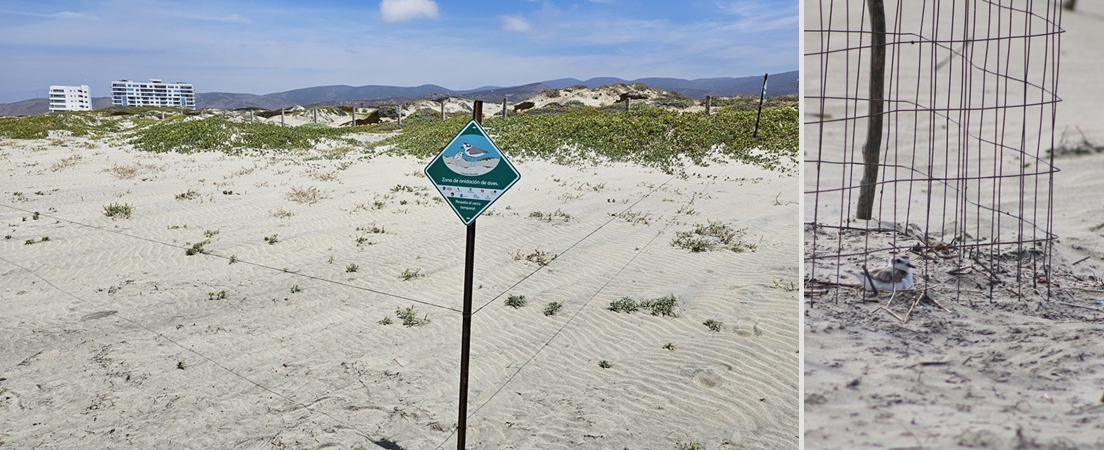
Example Ensenada, Mexico
In Ensenada (Baja California), consistent nest protection paid off in the 2026 breeding season: Pronatura Noroeste, Pro Esteros and other partners safeguarded snowy plover nests through monitoring, practical protection measures (fences, nest enclosures, sandbag barriers, beach steward) and environmental education. According to Pronatura Noroeste, the number of successful nests rose from 16 (2025) to 30, and the number of hatched chicks from 33 to 63. The least tern also benefits; with the City of Ensenada, an official municipal day for both species was proclaimed. We support this work (Saving Mexico’s Imperiled Beach-Nesting Birds).
Outlook
Building on the exchange, we want to develop a practical guide for everyone committed to the protection of coastal breeding sites: with proven measures that can be adapted to the respective site, and with consistent methods for recording disturbance and breeding success and for identifying promising measures. What works at one breeding site can save chicks at another!