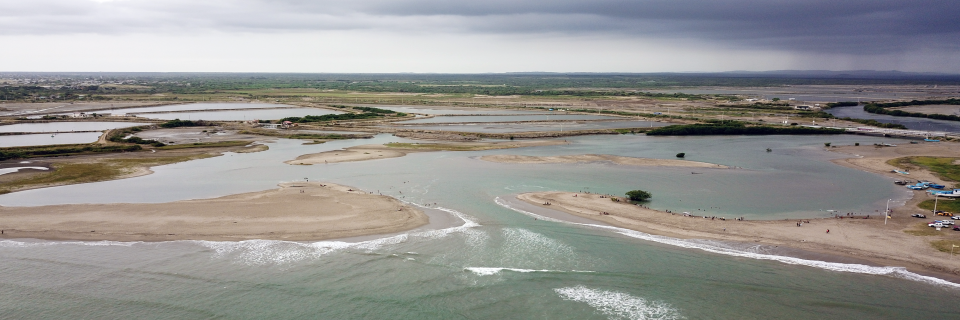
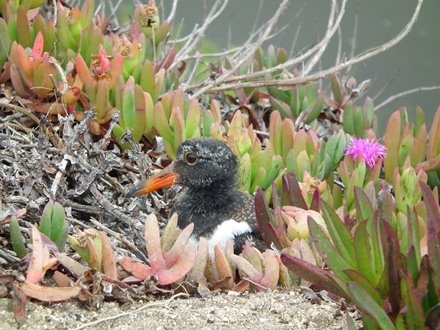
The winning projects of the project competitions
Third Project Competition 2023-24
The foundation Manfred-Hermsen-Stiftung is Coordinating partner of the latin-american Coastal Wetlands Initiative and launched the third competion on 2. Feburar 2023. 9 projects have been chosen and received funding from us.
This video of 2024 shows the Progress of the 3rd Project Idea Competition - Coastal Wetland Initiative.
Environmental Education and Dialogues with Residents and Key Stakeholders of the Jambelí Canal, Gulf of Guayaquil, Phase II – “Aves y Conservación”, Ecuador
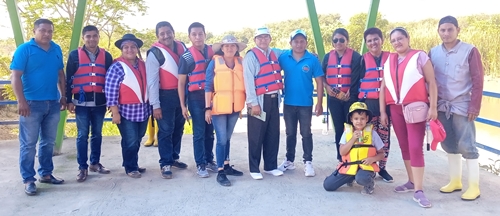
This project focuses on raising the awareness of the local community about the diverse ecosystem services provided by mangroves and on fighting the pollution of the coastal wetlands Naranjal and Balao coastal wetlands, which play a vital role for migratory birds.
Through practical measures to reduce, reuse, and recycle plastics, along with environmental education activities tailored to different target groups, the project aims to trigger a change in the mindset and habits of the local population. In parallel, the management plan for the mangrove forests will be updated and hence a sustainable management of the mangroves and coastal wetlands promoted.
Living Mangroves in the Valdivia Commune - CONMAR, Ecuador
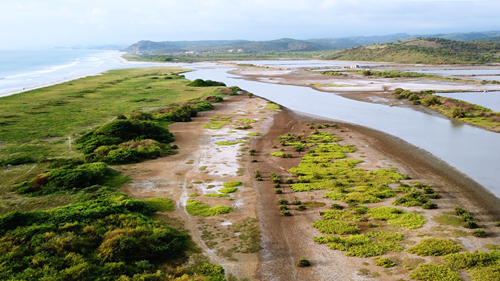
The project aims at the protection of coastal wetlands in the province of Santa Elena, particularly the estuary of the Valdivia River, through a cooperative approach involving local schools, artists, and community organizations.
There are diverse activities included, such as theoretical and practical workshops conducted in schools, as well as field trips to provide first-hand experience and study the geomorphological evolution of the wetland. Wall paintings are going to be created with local artists and community members, expressing the socio-cultural value of the wetlands and creating an additional attraction for ecotourism. Pursuing a participatory approach, the project team works hand in hand with local organizations and the community.
Feast in the Wetland: Trophic Ecology as a Tool for Awareness on Coastal Wetlands - CORBIDI, Peru

This project is taking place in two coastal wetlands that are recognized for their biodiversity and designation as Ramsar sites: the Pantanos de Villa in Lima and the mangroves of San Pedro de Vice in Piura. The project team is conducting research on the shorebirds' diet in these wetlands, aiming to gather knowledge about food chains and also the food supply for both birds and humans.
Conducting field and laboratory research, the food sources of the birds are being investigated, analyzing stomach contents and observing their feeding behavior. Through workshops and campaigns, awareness is being raised on the significance of wetlands as a vital food source and a connection between the birds' diet and the Peruvian food culture established. In this way the project strengthens the cultural identification and appreciation towards these valuable ecosystems.
Wings and good Winds! Knowledge Management and Promotion of Research for Biodiversity Conservation in the Coastal Wetlands of Pisco and San Andrés, Ica - GAP, Peru
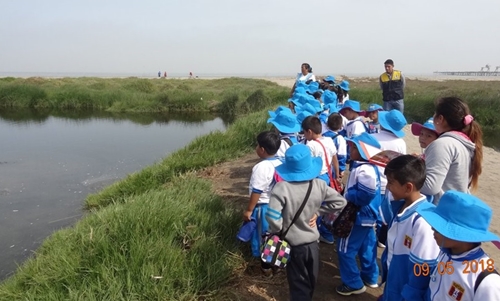
Teachers and students from six schools in the project´s region are being educated on the biodiversity of their local wetlands. They receive training on the use of online platforms like the 'Atlas de Humedales Costeros' as a tool for citizen science and 'iNaturalist' to identify and monitor flora and fauna.
On the basis of this trainings, monthly bird counts are being conducted along the coasts of Pisco and San Andrés, gathering data on their seasonal variations and the conservation status of the area. Through 18 environmental education workshops and field excursions, an additional 50 teachers and 900 students in the region are being involved.
Biodiversity Research in Peruvian Coastal Wetlands – Universidad Científica del Sur, Peru
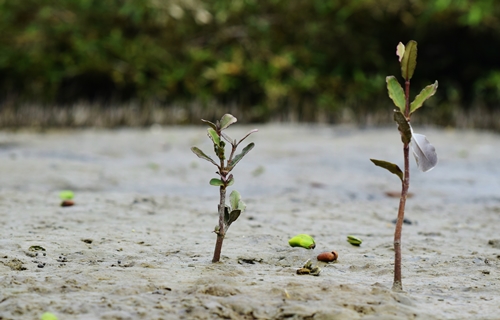
The project closes information gaps on coastal wetlands along the Peruvian coast, looking at those wetlands that have only scarcely been studied so far and generating a database that contributes to decision-making in policy and research.
In the scope of investigatory field trips, focus is placed on data collection of vascular plant communities and avifauna. With the aid of rapid assessment and sampling methodologies, information for scientific publications and for the completion of the database of the 'Atlas de Humedales Costeros' is being collected.
News update
Biocultural Pictograms for Information Boards in Coastal Wetland of Ecuador, Peru, and Chile – Aves del Viento.
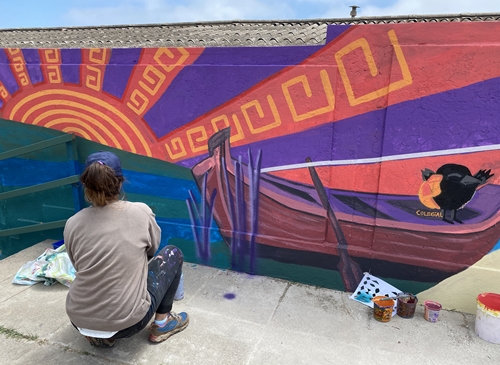
Multiple organizations from Chile, Ecuador, and Peru are collaborating to create an open-access catalogue of biocultural pictograms that will serve the visual communication of important information for the protection of coastal wetlands and dissemination of knowledge.
The pictograms are designed for their employment across the entire chain of coastal wetlands within the initiative's geographic scope, incorporating both ecosystem and cultural aspects. By working closely with the target groups, the socio-ecological context is being taken into account to ensure an effective communication.
Participatory Management of the El Culebron Wetland Basin - CEAZA, Chile

In the Coquimbo region, the protection and sustainable use of the El Culebrón wetland and its catchment area are being promoted through the participatory development and implementation of an interdisciplinary action plan.
The measures entail the creation of a “green classroom” for educational centres and visitors, including a nature trail and information boards in the wetland. In the scope of a participatory monitoring there is data on flora and fauna being collected and indicators for anthropogenic influences on the ecosystem monitored. The results are being used in the development of the action plan.
Integrated Management for the Protection of Valparaiso’s Coastal Wetlands Network - FIPaNCu, Chile
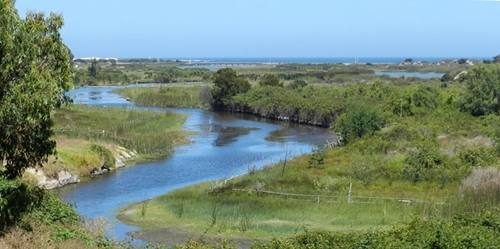
Through research, environmental education, and the dissemination of scientific knowledge, coastal wetland conservation and knowledge building are being promoted in the Valparaiso region to foster an appreciation for, and sustainable use of, the coastal wetlands.
Among the diverse activities, the use of the environmentally friendly DNA sampling technique to record biodiversity can be highlighted. This method enables data collection avoiding disturbance of habitats and organisms. Through workshops with local community members, volunteers are trained to monitor wetlands and identify threats, encouraging active citizen participation and creating a sense of responsibility for wetland conservation.
Climate and Socio-Ecological Actions for Coastal Municipalities: Integrative Solutions for Wetlands and Shorebirds – ROC, Chile
 Supporting the agenda of coastal municipalities on climate and environment, a training program for municipal representatives in at least five regions of Chile is being developed. The program focuses on creating integrative and site-specific solutions to protecting coastal wetlands and shorebirds.
In collaboration with community administrations, workshops and trainings are being offered where existing gaps and demands are being identified and solutions drafted. In addition, pilot actions will be developed in the Cartagena wetland for testing and demonstration purpose. Furthermore, at least one face-to-face event will be organized for the exchange of experiences among all program participants.
2021 - 2022
The project proposals were evaluated by a committee of experts, and the following 10 projects were selected for funding:
 Education and Environmental communication to Residents and Key Stakeholders of the Jambelí Canal, Gulf of Guayaquil
Conducting teacher trainings on mangrove ecosystem services, the project aims to strengthen the appreciation of coastal wetlands in the upcoming generation and improve environmental education in schools. The Jambeli Canal, with its rich biodiversity, fishing grounds, and about 10,000 wading birds visiting the area annually, serves as a great example and represents the main subject of this programme.
The implementing organization is "Aves y Conservación", a renowned bird conservation organization and BirdLife partner in Ecuador, following up on a project conducted scope of the first project competition.
 Strengthening the Wetlands Guardians Network: Leaders for the conservation of coastal wetlands in Peru
This project continues a programme for the formation of students and young professionals to become guardians of the coastal wetlands, conducted in the first project competition with students from the greater Lima area. This time there are more than 50 participants from the entire coast of Peru who applied to join the group and receive training to become "Wetlands Guardians" (Guardianes de los Humedales).
The NGO "Grupo-Rana" designed an interestingly structured curriculum for the participating students, incorporating leaders and past students that joined the network of the Wetlands Guardians.
 Community empowerment and promotion of research for the conservation of the coastal wetlands of Viru, La Libertad, Northwest Peru
In order to promote community participation as well as research in wetlands, an updated profile of the wetlands of Viru with assessment of their ecological condition is being prepared. On the basis of this, local awareness campaigns will be carried out and scientifically orientated educational material produced and disseminated.
The project is led by the Institute of Ecology and Conservation Research ("Instituto de Investigación en Ecología y Conservación", IIECCO), where a group of young biologists have joined with the aim of raising awareness in civil society for the conservation of wetlands and to represent the community´s interest for the protection of these ecosystems.
 Educational plan based on the environmental children´s tale about the coastal wetlands of the Coquimbo Region
The project aims to create awareness of the cultural and ecological value of coastal wetlands to the young generation, parents and teachers, by imparting understanding of relationship and processes in nature, as well as threats introduced by humans, in the form of a children’s tale about the coastal wetlands of the region of Coquimbo titled "La Orquesta del Humedal".
The project is hosted by the Center for Advanced Studies in Arid Zones ("Centro de Estudios Avanzados en Zonas Áridas”, CEAZA), where a group of artist, teachers, and scientist have started in 2020 with different education materials of this character.
 Car-free beaches: dissemination and awareness-raising actions on threats by cars in coastal wetlands
To stop motorized vehicles driving on beaches, dunes, and coastal wetlands, an awareness raising and law-enforcement campaign in coordination with the corresponding authorities is being conducted on national level. Alerts on adverse impacts of vehicles entering coastal ecosystems, legal consequences, and advice on how to report to local authorities are translated into the design of dedicated warning signs that are placed in strategical location in coordination with local authorities.
The project is conducted by the Chilean Network of Bird and Wildlife Observers ("Red de Observadores de Aves y Vida Silvestre de Chile", ROC), who build solid links with relevant stakeholders through their long trajectory of work in the area of bird and crucial bird habitat conservation in Chile.
 Programme for environmental strengthening, empowering neighbours, workers, and students at Bahía de Coquimbo
The benefits of wetlands, beaches, and dunes are promoted through training, workshops, outreach, monitoring, and seminars. In addition, the American Oystercatcher (Haematopus palliatus) is being used as a "flagship" species in a local awareness campaign.
The Wild Bird Observation and Conservation Network ("Red de Observación y Conservación de las Aves Silvestres", RedAves) aims to raise awareness and protect Coquimbo's wild birds throughout the region.
 Mantagua Wetland, where water and life flow together
This project aims to improve local capacities in schools and communities in the region of the Mantagua wetland. Topics related to ecosystem services, conservation, ecology, and environmental education are taught in trainings, workshops, and citizen science campaigns.
Momentum is a Chilean NGO made up of natural scientists who work to protect and promote natural and cultural heritage.
 Local empowerment for the conservation and recovery of coastal wetlands, Province of San Antonio
This project focuses on educational and cultural events, trainings, wall paintings, and on environmental monitoring in the San Antonio wetlands. All of this is accomplished by a dedicated group of local stakeholders who collaborate as a network.
The non-profit organisation "Cordell-Ojos de Mar" is constituted of young professionals. They have become a very influential and popular group in the local community and are highly engaged in social media.
 Cáhuil wetland, promoting the balance between local development and conservation of biodiversity
Conducting on-site meetings and interviews, the project investigates the relations of local people and organizations to the Cáhuil wetland. With the results educational campaigns and workshops are tailored to raise awareness and promote sustainable community development in accordance to conservation criteria.
The NGO "Biósfera" is a young organisation from Chile's O'Higgins region that focuses on community development alongside nature conservation.
 Wetlands and birds of the coast of Maule
The project focuses on the provision of theoretical and practical knowledge, both inside and outside of the regular classroom, expanding learning experiences for local students, organisations, teachers, and authorities. Community and scientific outreach, environmental education for school kids, and the design and dissemination of environmental education materials are among the activities being carried out.
This project is led by the community-based NGO for the Protection and Conservation of Maule Mataquito (“Agrupación Defensa y Conservación Maule Mataquito”, ADEMA). They work to protect the coastal area between the Maule and Mataquito rivers.
2019 - 2020
In the first project-idea competition, we funded together with the Lighthouse Foundation 10 projects of a total of 27 proposals, which have been evaluated by an expert committee.
 Strengthening local capacity for community monitoring of shorebirds in protected mangrove areas - Ecuador
The project involves an important area of mangroves and extensive tidal flats in a large estuarine region of the Gulf of Guayaquil. Members of various local interest groups have been trained in monitoring the avifauna of the area, especially shorebirds, in order to continuously monitor the diversity and number of birds that visit the area.
"Aves y Conservación" is a national BirdLife partner with the goal of supporting the conservation of birds, their habitat and biodiversity as a whole in Ecuador.
 Strengthening research, management and governance of the coastal wetlands of Pisco and San Andrés - Peru
By combining activities such as scientific fieldwork and the design and dissemination of educational materials with workshops, decision-makers and local stakeholders have been able to build knowledge and appreciation of these ecosystems and their biodiversity, and develop an environmental management plan for these wetlands.
The association "Grupo de Aves de Peru" consists of local working groups in different parts of the country dedicated to the conservation of birds in their natural habitats.
 Getting to know the wetlands of Peru's north coast through local festivals
An awareness campaign through media and various festivals highlighted the importance of the wetlands of the Virrilá Estuary (Piura), San José and Eten (Lambayeque) as ecosystems in need of protection.
The Center for Ornithology and Biodiversity (CORBIDI) is a Peruvian NGO and works to promote science, disseminate knowledge about endangered species and fragile ecosystems, and carry out research and conservation activities.
 The guardians of the wetlands
In this project, an innovative training program called "Los Guardianes de los Humedales" was developed. A group of 30 young university students and professionals from different academic backgrounds received training in theoretical and practical modules related to coastal wetlands conservation.
The University "Científica del Sur" is one of the most important research institutes and knowledge brokers regarding coastal wetlands in Peru. Their project took an innovative approach to capacity building for research, monitoring and environmental education.
 Pichilemu Coastal Wetlands: Towards their conservation
In this project an integrated conservation plan in the Cahuil and Petrel wetlands was developed. The designated NGO was responsible for the overall development of the process, especially for the involvement of relevant local stakeholders.
The Center for Sustainable Development of Pichilemu (CEDESUS) is a local non-profit organization that promotes and supports the protection and restoration of the natural and cultural heritage around the small but tourist coastal fishing village of Pichilemu.
 Renaturation and restoration of biodiversity to preserve the Mantagua wetland.
To achieve a better understanding and improvement of the ecological conditions in the Mantagua wetland, work was done on two levels: Out in the field, research, monitoring, and the development of a reliable biodiversity database were conducted. The administrative side included coordination, roundtables, and the establishment of a network with local stakeholders.
The Foundation for the Integration of Natural and Cultural Heritage (FIPaNCu) brings together young professionals with a strong interest in environmental conservation who want to enhance natural and cultural heritage and connect local communities with their environment. The foundation aims to support the balance between human activities and nature.
 Water in the Desert - Protection and Sustainable Management of the Wetland La Chimba, Antofagasta
The development of a comprehensive curriculum on aquatic ecosystems and human impacts for schools and government agencies was realized. For this purpose, a three-stage process was carried out: the elaboration and selection of topics, the training of teachers, and finally the application of the curriculum.
The Kennedy Foundation focuses on wetland conservation and water protection as a vital resource. It leads conservation efforts in a number of important wetlands in Chile and actively promotes good stewardship, environmental education, research, and public awareness.
 Shorebird monitoring network to protect wetlands on Chile's semi-arid coast
Environmental education, shorebird population surveys, and the development of a local conservation plan were the main activities of this project. An important outcome is the establishment of a network with local stakeholders for monitoring two threatened shorebird species, the American oystercatcher (Haematopus palliatus) and the Snowy plover (Charadrius nivosus).
The mission of the Chilean Bird and Wildlife Observers Network (ROC) is to protect birds and wildlife in Chile through research, outreach, citizen science, and environmental education by working with ornithologists and an extensive volunteer network along the Chilean coast.
 E-learning course for the conservation of coastal wetlands and shorebirds
An e-learning course was developed for the protection of Chile's coastal wetlands, with the aim of imparting knowledge about the sensible use of these areas and the conservation of biodiversity. Of nearly 600 participants, 459 successfully completed the course.
The Chilean Foundation "Núcleo Nativo" was created in 2015 with the aim of strengthening the bond between people and the environment and promoting socio-ecological balance. In this context, the Foundation's conceptual pillars include support for entrepreneurship amongst disadvantaged and vulnerable groups, environmental education, and the protection and restoration of the natural environment.
 Analysis and strengthening of management and governance related to coastal wetlands
The project was dedicated to the responsible management of coastal wetlands, focusing on relevant regulations in Chile, Peru and Ecuador. To this end, a comparative study of the environmental legal instruments in the three countries was carried out, which will allow for future proposals to improve the legal protection of coastal ecosystems.
The University of Nottingham-Chile is a foundation established by the British University to facilitate collaboration with partner organizations in Chile and to support developments in Chile and throughout South America.